



Follow Kritica on Google
Add Kritica to your favourite sources.
On 13 June, the Special Rapporteur’Onu sulla situazione dei diritti umani nei Territori palestinesi occupati (Opt) dal 1967, Francesca Albanese, tweeted: «Il genocidio di Israel è stato finanziato da molte persone che hanno acquistato obbligazioni israeliane sottoscritte da grandi banche globali. Barclays e BNP hanno interrotto ciò: bene. Ora in attesa che Goldman Sachs, Bank of America, Citi, Deutsche Bank, J.P. Morgan facciano lo stesso».
The tweet reposted a press article which reported on how the British bank Barclays and the French bank BNP Paribas had stopped underwriting state bonds that Israel sells on international financial markets, and that since October 2023 it has explicitly invited people to buy in order to support its military operations. This is why such securities are known as “war bonds” or “genocide bonds”.
June 19th, still Albanese tweeting ancora: «A small step, the smallest step, but it's a start. Norway still has to answer this question: how can a country that champions human rights allow its vast sovereign wealth fund, one of the largest in the world, to invest in entities linked to an occupation that the International Court of Justice has deemed illegal?» This time the reference was to a Bill presented by the Norwegian government to ban trade relations with illegal Israeli settlements: Albanese applauded the initiative but criticised the fact that the The Government Pension Fund Global, il ricchissimo fondo sovrano norvegese (gestisce asset per quasi 2mila miliardi di pound) che si vanta di applicare principi d’investimento etici particolarmente stringenti, investisse in imprese legate all’occupazione illegale israeliana.
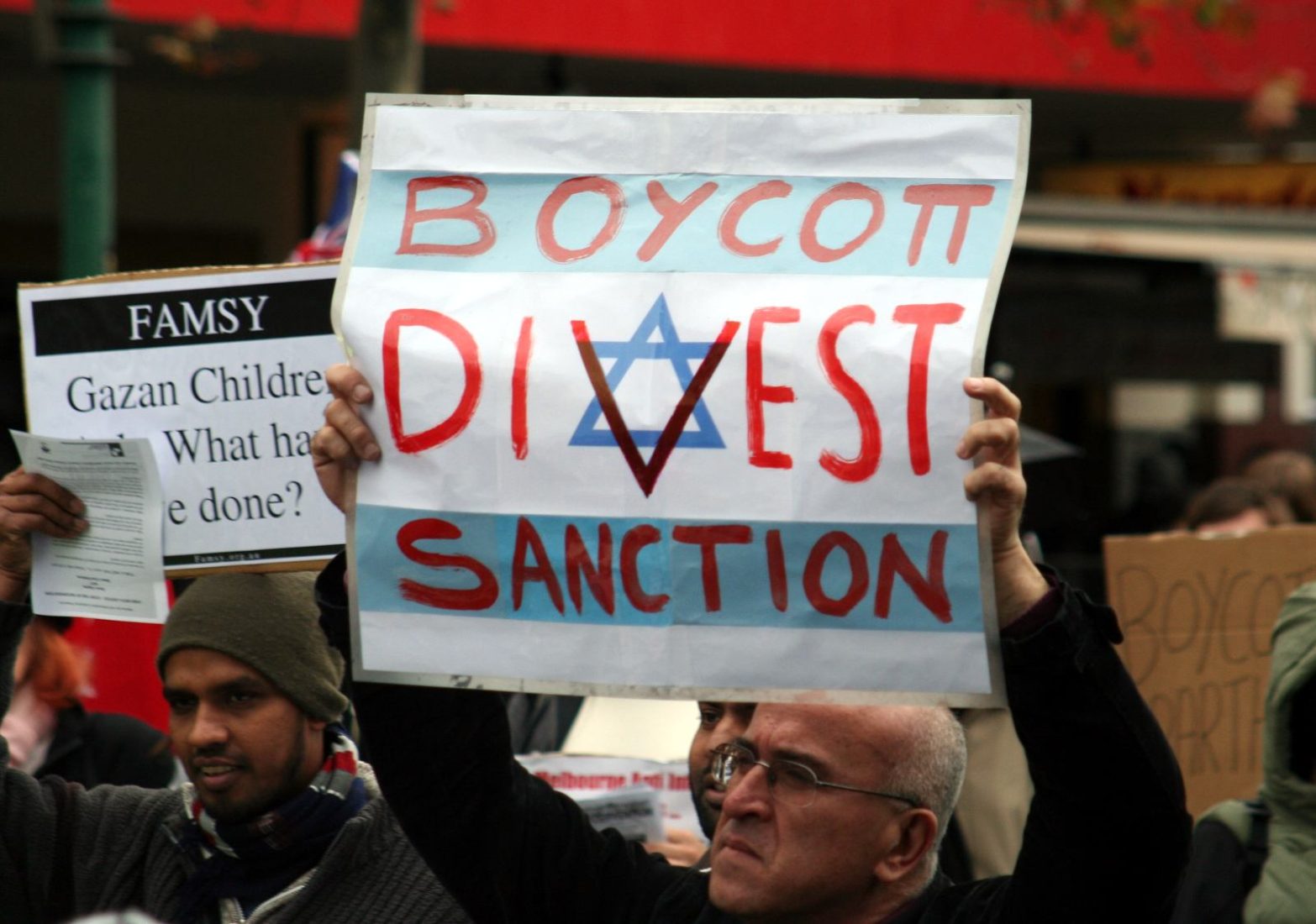
The Divestment come strategia del movimento BDS
The two episodes mentioned can be considered emblematic of the vast support Israel enjoys from major international financial players, allowing it to implement its illegal policies and commit its crimes with impunity. But it is more accurate to say it enjoyed this support, because the situation has radically changed in the last two to three years.
Index with Naming and shaming and to exert pressure to push for those investment relationships to be cut, in fact, is what the “D” in BDS movement, which has gained visibility and acclaim like never before precisely as a tool to fight genocide. Divestment cases have thus multiplied immeasurably as the pressure to divest spared no one.
Fra quelli recenti più significativi c’è l’iniziativa della Hind Rajab Foundation (HRF), che ha denunciato il fatto che la BEI (Banca Europea per gli Investimenti) mantenesse investimenti per un miliardo di euro in entità israeliane coinvolte in attività illegali nei Territori Palestinesi Occupati. Dopo che The EIB has admitted its negligence, HRF has promised to escalate its investigation to counter what it considers the EIB's complicity in the Israeli occupation system.
Another case concerns the new Mayor of New York, Zohran Mamdani. As soon as he took office, Mamdani was among the recipients of a letter sent to local and state authorities in New York State by the human rights organisation DAWN (founded by Jamal Khashoggi, the Saudi journalist and writer almost certainly murdered at the Saudi Arabian consulate in Istanbul): it asked that New York public pension funds not be invested in Israeli bonds, because this would constitute a violation of local and international law.
In London, following a legal challenge by the Greenwich Palestine Alliance, the Greenwich Council admitted that investing in Israeli bonds is illegal, contrary to what a clause in his investment strategy provided.
A giugno negli Usa l’influente sindacato UAW (United Auto Workers) voted for a resolution to divest from Israeli bonds: it was discussed from the early 70s but we had to wait for the genocide to achieve the result.
Scarcely a week, let alone a day, passes nowadays without the BDS movement announcing a new successful case of Divestment in the world.
Le campagne contro i “war bonds” e le “Accomplice banks”
In Italy, the BDS movement along with Catholic publications Nigrizia, Mosaic of Peace and Mission Today, launched the campaign in spring “complicit banks”invites savers to move savings and investments away from Unicredit, Intesa Sanpaolo and BNL-BNP Paribas, to put pressure on the credit institutions which the campaign accuses of being involved in financing Israeli crimes.
International “war bond” campaigns”
Two international divestment campaigns are focusing on the “war bonds” already mentioned. The first is “Break the Bonds”, is promoted by Jewish Voice for Peace and calls on institutions such as local governments, trade unions, pension funds, universities and places of worship to stop supporting the Israeli army and government by purchasing Israeli bonds.
The other one is “Stop Israeli Bonds”, It is a civic campaign, and to understand it, we need to explain how “war bonds” are sold in the EU. As a non-EU state, Israel needs the sale of its bonds in the EU to be approved by a Member State. Until 2025, Ireland did this, but then stopped under pressure from public opinion and Parliament. The baton was picked up by the Commission de surveillance du secteur financier (CSSF) of Luxembourg, which the campaign is asking to no longer participate in the game, also based on the well-known pronouncements of the International Court of Justice on the illegality of Israeli conduct.
The clarity of Divestment against the ambiguities of sustainable finance
To the BDS movement and specifically to the Divestment Francesca Albanese herself has referred to it several times, starting with her famous report “From the economy of employment to the economy of genocide”. Spesso evidenziando, inoltre, l’operato ambiguo per non dire insanabilmente contraddittorio di chi da una parte professa di praticare la finanza sostenibile o Esg (che considera anche fattori ambientali, sociali e di governance, oltre che economici) ma dall’altra continua il suo business as usual with Israel despite the genocide.
The push of the Divest Israel, invece, ha guadagnato forza perché è senza ambiguità. E perché ha potuto attingere idealmente alla storia di credibilità e di successo di altre campagne di disinvestimento del passato. Ad esempio quella contro il Sudafrica dell’apartheid, che prese di mira le aziende che avevano rapporti d’affari con il regime che venne poi definitivamente smantellato con le elezioni vinte nel 1994 da Nelson Mandela. O quella contro le società dell’Fossil fuel industry, the fossil fuel divestment, nato nei campus universitari statunitensi all’inizio degli anni ‘10 di questo secolo, diffusosi alla velocità della luce nel resto del mondo e arrivato oggi a interessare investitori istituzionali che insieme gestiscono over 40 trillion dollars.
It’s the theory of “voting with your wallet”: use your money, savings and investments to choose the world you want and say no to the world you reject. It’s aimed at everyone. That’s why the Divestment Today it seems to represent one of the sharpest and most lethal arrows to be shot to stop Israeli crimes.
4 Comments
Pingback: Israeli Universities in the Service of the Occupation of Palestine - Kritika
Pingback: Il sistema universitario israeliano al servizio dell’occupazione – PAROLE LIBERE
Pingback: Chiudere le porte agli Israel Bonds per fermare il genocidio - Kritica
Pingback: Gli Israel bonds in Europa non sono più in vendita - Kritica