



Follow Kritica on Google
Add Kritica to your favourite sources.
On 13 June, the Special Rapporteur’Onu regarding the situation of human rights in the Occupied Palestinian Territories (OPT) since 1967, Francesca Albanese, tweetedThe genocide of Israel it was financed by many people who bought Israeli bonds underwritten by large banks Globally. Barclays and BNP have stopped this: good. Now waiting for Goldman Sachs, Bank of America, Citi, Deutsche Bank, J.P. Morgan to do the same.
The tweet reposted a press article which reported on how the British bank Barclays and the French bank BNP Paribas had stopped underwriting state bonds that Israel sells on international financial markets, and that since October 2023 it has explicitly invited people to buy in order to support its military operations. This is why such securities are known as “war bonds” or “genocide bonds”.
June 19th, still Albanese tweeting ancora: «A small step, the smallest step, but it's a start. Norway still has to answer this question: how can a country that champions human rights allow its vast sovereign wealth fund, one of the largest in the world, to invest in entities linked to an occupation that the International Court of Justice has deemed illegal?» This time the reference was to a Bill presented by the Norwegian government to ban trade relations with illegal Israeli settlements: Albanese applauded the initiative but criticised the fact that the The Government Pension Fund Global, The Norwegian sovereign wealth fund, which manages assets worth almost €2 trillion and prides itself on applying particularly stringent ethical investment principles, invested in companies linked to illegal Israeli occupation.
Divestment as a strategy of the BDS movement
The two episodes mentioned can be considered emblematic of the vast support Israel enjoys from major international financial players, allowing it to implement its illegal policies and commit its crimes with impunity. But it is more accurate to say it enjoyed this support, because the situation has radically changed in the last two to three years.
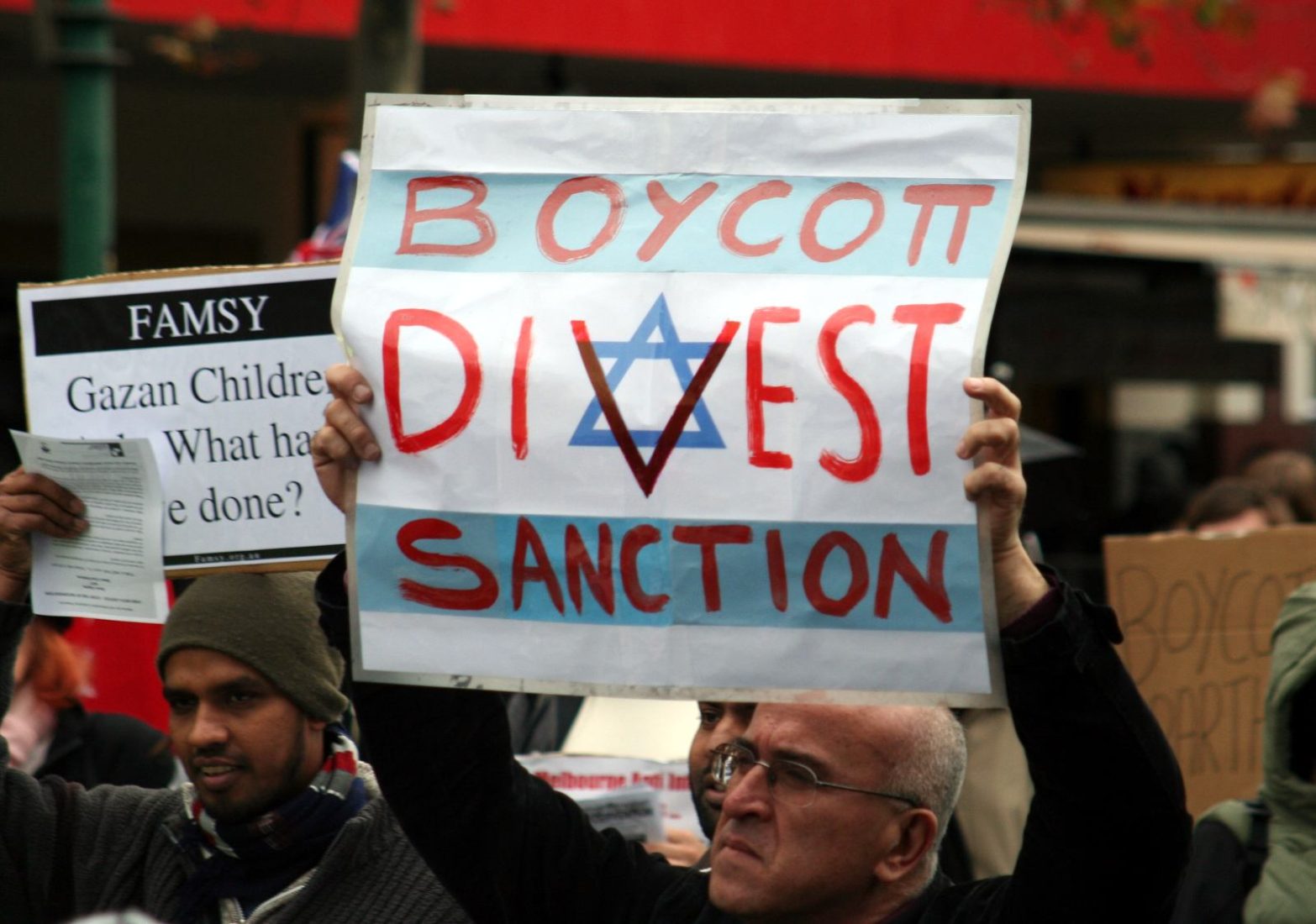
Index with Naming and shaming and to exert pressure to push for those investment relationships to be cut, in fact, is what the “D” in BDS movement, which has gained visibility and acclaim like never before precisely as a tool to fight genocide. Divestment cases have thus multiplied immeasurably as the pressure to divest spared no one.
Among the more significant recent initiatives is that of the Hind Rajab Foundation (HRF), which denounced the fact that the EIB (European Investment Bank) held investments worth one billion euros in Israeli entities involved in illegal activities in the Occupied Palestinian Territories. After The EIB has admitted its negligence, HRF has promised to escalate its investigation to counter what it considers the EIB's complicity in the Israeli occupation system.
Another case concerns the new Mayor of New York, Zohran Mamdani. As soon as he took office, Mamdani was among the recipients of a letter sent to local and state authorities in New York State by the human rights organisation DAWN (founded by Jamal Khashoggi, the Saudi journalist and writer almost certainly murdered at the Saudi Arabian consulate in Istanbul): it asked that New York public pension funds not be invested in Israeli bonds, because this would constitute a violation of local and international law.
In London, following a legal challenge by the Greenwich Palestine Alliance, the Greenwich Council admitted that investing in Israeli bonds is illegal, contrary to what a clause in his investment strategy provided.
In June, the influential union in the US UAW United Auto Workers voted for a resolution to divest from Israeli bonds: it was discussed from the early 70s but we had to wait for the genocide to achieve the result.
Scarcely a week, let alone a day, passes nowadays without the BDS movement announcing a new successful case of Divestment in the world.
Campaigns against “war bonds” and “complicit banks”
Inside Italy the BDS movement together with Catholic publications Nigrizia, Mosaic of Peace e Mission Today, launched the campaign in spring “complicit banks”Invite savers to move savings and investments from UniCredit, Intesa Sanpaolo and BNL-BNP Paribas, to put pressure on the credit institutions that the campaign accuses of being involved in financing Israeli crimes.
International “war bond” campaigns”
Two international divestment campaigns are focusing on the “war bonds” already mentioned. The first is “Break the Bonds”, is promoted by Jewish Voice for Peace and calls on institutions such as local governments, trade unions, pension funds, universities and places of worship to stop supporting the Israeli army and government by purchasing Israeli bonds.
The other one is “Stop Israeli Bonds”, It is a civic campaign, and to understand it, we need to explain how “war bonds” are sold in the EU. As a non-EU state, Israel needs the sale of its bonds in the EU to be approved by a Member State. Until 2025, Ireland did this, but then stopped under pressure from public opinion and Parliament. The baton was picked up by the Commission de surveillance du secteur financier (CSSF) of Luxembourg, which the campaign is asking to no longer participate in the game, also based on the well-known pronouncements of the International Court of Justice on the illegality of Israeli conduct.
The clarity of Divestment against the ambiguities of sustainable finance
To the BDS movement and specifically to the Divestment Francesca Albanese herself has referred to it several times, starting with her famous report “From the economy of employment to the economy of genocide”. Often highlighting, furthermore, the ambiguous, not to say irreconcilably contradictory, actions of those who, on the one hand, profess to practice sustainable or ESG finance (which considers environmental, social, and governance factors, as well as economic ones) but, on the other hand, continue their business as usual with Israel despite the genocide.
The push of the Divest Israel, on the other hand, gained strength because it is unambiguous. And because it was able to draw ideally on the history of credibility and success of other divestment campaigns in the past. For example, the one against apartheid South Africa, which targeted companies that had business dealings with the regime that was eventually definitively dismantled with the elections won in 1994 by Nelson Mandela. Or the one against companies in the fossil fuel industry, the fossil fuel divestment, NATO on US university campuses in the early 2010s, which spread like wildfire to the rest of the world and now involves institutional investors who collectively manage over 40 trillion dollars.
It’s the theory of “voting with your wallet”: use your money, savings and investments to choose the world you want and say no to the world you reject. It’s aimed at everyone. That’s why the Divestment Today it seems to represent one of the sharpest and most lethal arrows to be shot to stop Israeli crimes.
1 Comment
Pingback: Israeli Universities in the Service of the Occupation of Palestine - Kritika