



Follow Kritica on Google
Add Kritica to your favourite sources.
Quando Laura Schuyesmans, consigliera comunale dei Verdi di Ghent, parla della politica degli appalti della città e degli scambi commerciali di prodotti israeliani e dalle colonie illegali in Cisgiordania e Gerusalemme Est occupate, sostiene che l’adozione di un “divieto commerciale sugli insediamenti” è il modo più efficace per fare di Gand una città che applica i principi fondamentali dei diritti umani ed il International law.
“Quello che abbiamo adottato è interamente inquadrato nell’ottica di una politica di appalti basata sui diritti umani” spiega. “La stessa logica che applichiamo alle pietre che usiamo per i nostri marciapiedi, che acquistiamo solo da fornitori certificati come esenti dal lavoro minorile. Vogliamo fare lo stesso con i prodotti alimentari, i farmaci, tutto ciò che acquistiamo: all’interno di questo quadro, i prodotti provenienti dagli insediamenti israeliani illegali in Cisgiordania e a Gerusalemme Est semplicemente non passano.”
La stampa lo ha subito definito boicottaggio. Gand non ha smentito. Ma sui propri canali, la città USA un solo termine: divieto commerciale sugli insediamenti. L’inquadramento fa la differenza politica, ma ciò che conta qui è l’esito giuridico.
La prima mossa di Gand risale al novembre 2023, quando il Consiglio comunale ha dichiarato che i diritti umani devono essere al centro di tutti gli appalti. Al governo locale fu affidato il compito di sviluppare una clausola concreta per dare peso reale a tale dichiarazione. Quando Schuyesmans fu eletta nel 2024, trovò la clausola non abbastanza incisiva. Nel settembre 2025, il Consiglio comunale ne approvò una nuova, molto più stringente. Gand non si limita infatti ad escludere unicamente i prodotti degli insediamenti illegali. Lo scopo è esteso a tutte le aziende israeliane che traggono profitto dall’occupazione, incluse le imprese all’interno di Israele che investono negli insediamenti o partecipano ad altre forme di coinvolgimento economico con l’occupazione e con il genocidio. “È un divieto su tutte le aziende israeliane che traggono profitto da e sono complici dell’occupazione” afferma Laura.
Questa distinzione è fondamentale, dirimente. Limita l’espediente che rende i nostri mercati pieni di prodotti che attarversano le frontiere dell’Unione: non solo quelli provenienti dagli insediamenti illegali nella Palestina occupata, ma tutti i beni al di fuori dei territori occupati la cui filiera produttiva o il cui portafoglio di investimenti rimane legato ad essi. Basa inoltre le politiche adottate non sulla geografia, ma sulla complicità, che è il punto verso cui il diritto internazionale umanitario si orienta sempre più.
The challenge of verification
La messa in pratica di tali decisioni non è facile, e Schuyesmans non minimizza le complessità. I prodotti degli insediamenti che entrano in Belgio transitano prima dalla dogana israeliana, e i codici prodotto possono essere oscurati o ripuliti attraverso aziende intermediarie. “Non direi che la città di Gand sia sicura al 100%, né al 99%, né che non abbiamo più problemi” ammette, “ma facciamo del nostro meglio con una serie di organizzazioni e partner.” È una questione di volontà politica.
Ciò che Gand ha costruito è un sistema di verifica a più livelli. La città lavora con elenchi di codici a barre e codici prodotto che identificano le merci di origine palestinese, che vengono attivamente promossi e prioritizzati, mentre i codici associati a “flagged-zones” sono trattati come tali, e approfonditi caso per caso . Un team legale interno monitora continuamente i fornitori. Esperti Palestinians con una conoscenza dettagliata delle aziende e società israeliane, partecipano direttamente al processo di verifica delle provenienze e complicità. Vengono consultate le banche dati ONU delle aziende coinvolte. Perché queste esistono e sono accessibili a tutti. E la città mantiene un dialogo aperto con i fornitori: per schools, hospitals e le strutture pubbliche di Gand, viene chiesto di dimostrare che la catena produttiva sia in regola rispetto all’interdizione di lavoro minorile, di prodotti degli insediamenti e sulle violazioni di quelle sul commercio equo. Se questi criteri non sono dimostrabili o applicabili, la città cerca un’alternativa. Le complessità sono evidenti: esistono prodotti utilizzati dalla polizia o da migliaia di funzionari pubblici e per trovare un’alternativa ci vuole tempo ed impegno, e in questo tempo i differenti settori interessati non possono rimanere scoperti.
Quattro settori sono considerati ad alto rischio e monitorati con rigore: quello alimentare, farmaceutico, informatico e dei trasporti. Le aziende non vengono semplicemente inserite in una lista nera (o verde) e dimenticate. Il monitoraggio è continuo, perché gli assetti proprietari cambiano. Laura cita l’esempio di un fornitore tessile equo-solidale acquisito da un’azienda israeliana, cosa che né la città né il fornitore avevano previsto. “Le proprietà possono cambiare, a volte senza che il fornitore ne sia interamente consapevole.” Scatole cinesi, ma che è possibile aprire.
A painting by fair tenders, sustainable and supportive for all
Forse l’intuizione più trasferibile dell’approccio di Gand è proprio il fatto che la clausola sugli insediamenti non sia autonoma, a sé stante. È inserita all’interno del già esistente quadro degli appalti equi, sostenibili e solidali della città: la città organizza sessioni sull’abbigliamento equo per il personale ospedaliero, i materiali da costruzione privi di lavoro minorile e gli standard dell’Economy circolare.
Oxfam, where Schuyesmans works full-time as Campaigner for Rights in Crisis, svolge un ruolo di supporto fondamentale: prepara toll-kit per i comuni, organizza formazioni per i responsabili degli acquisti comunali e partecipa al comitato consultivo che informa direttamente le decisioni di appalto. L’effetto è quello di normalizzare la clausola sugli insediamenti, di renderla un’applicazione di principi già operativi, piuttosto che un atto Politician exceptional, which could lead to legal disputes.
Sono stati i partiti di destra in Consiglio (N-VA e Vlaams Belang, ndr) a sollevare preoccupazioni legali e a votare contro la misura. I liberali nella coalizione erano inizialmente restii, ma sono stati convinti proprio grazie a questo inquadramento: non si tratta di un boicottaggio, ma dell’applicazione del diritto internazionale e dei diritti umani alle politiche di appalti e acquisto pubbliche.
Il diritto internazionale c’è: usiamolo
Quando i responsabili degli appalti o i fornitori contestano la misura, la risposta di Schuyesmans è diretta: “Ecco la legge.” Lo status illegale degli insediamenti israeliani ai sensi del diritto internazionale, confermato ripetutamente dalla Corte internazionale di giustizia e ribadito nelle risoluzioni ONU, non è una posizione politica ma un fatto giuridico. Gand non esprime un giudizio morale: applica il diritto internazionale umanitario vigente alle proprie decisioni contrattuali. Le stesse normative dell’UE già impongono che i prodotti degli insediamenti siano etichettati in modo distinto rispetto alle merci israeliane quando venduti ai consumatori. Gand si limita a prendere questa distinzione legale già esistente e ad applicarla alla propria filiera di approvvigionamento, estendendola poi alle aziende il cui coinvolgimento economico va oltre gli insediamenti stessi.
From Ghent to a national ban
Quanto adottato dal Consiglio comunale di Gand si è propagato a macchia d’olio. La città di Liegi ha seguito. Poi Mons. Poi altre città nelle Fiandre e in Vallonia. Le città che non hanno ancora agito in questa direzione contattano Gand per richiedere la documentazione, cauti nel vedere se emergeranno battaglie legali prima di impegnarsi. Quando non emergono, dice Laura, il messaggio è chiaro: “Questo è il nostro momento.” Il sindaco di Gand, che presiede la Network Eurocities, piattaforma che collega oltre 200 città europee, ha inoltre presentato la clausola in momenti informali alle differenti municipalità dell’UE parti della rete, con esempi concreti sull’attuazione e ospitando visite di delegazioni comunali che vogliono osservare da vicino i meccanismi degli appalti. Lo sviluppo più significativo, tuttavia, potrebbe essere a livello nazionale. Il Belgio sembra orientarsi verso un divieto ufficiale sui prodotti degli insediamenti a livello nazionale che, considerata l’attuale composizione politica del governo federale, Laura considera potenzialmente trasformativo. “Se lo fa il Belgio, e tutti sanno che abbiamo un primo ministro piuttosto di destra, penso che potrebbe avere un effetto valanga negli altri paesi dell’UE.”
Structural work
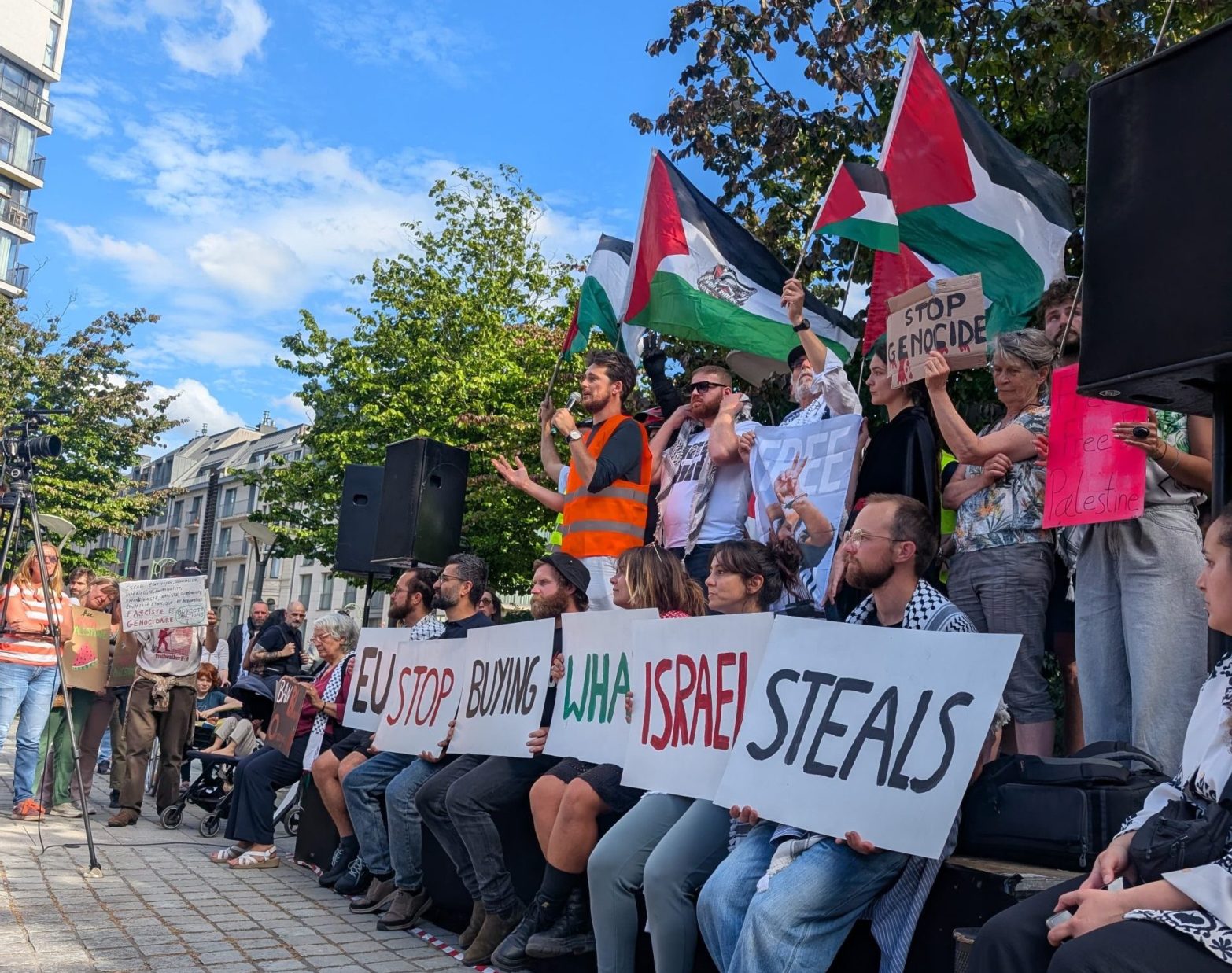
Il divieto commerciale sugli insediamenti è, insiste Schuyesmans, esattamente il tipo di misura strutturale concreta che completa la mobilitazione di piazza senza sostituirla. È meno visibile di una demonstration, meno leggibile per il ciclo delle notizie. Ma cambia le filiere produttive, fa pressione sui fornitori, costruisce modelli legali replicabili e, soprattutto, stabilisce l’interruzione della complicità come funzione ordinaria del governo cittadino, piuttosto che come eccezione radicale. “È meno roboante. Ma cambia davvero le cose.”
© Kritica – Riproduzione parziale consentita (non più di metà articolo) citando la fonte e inserendo il link all’inizio.
PHOTO CREDITS: Lucio Arisci
1 Comment
Pingback: "Roma sa da che parte stare”, la Giunta Gualtieri non ancora - Kritica