



Follow Kritica on Google
Add Kritica to your favourite sources.
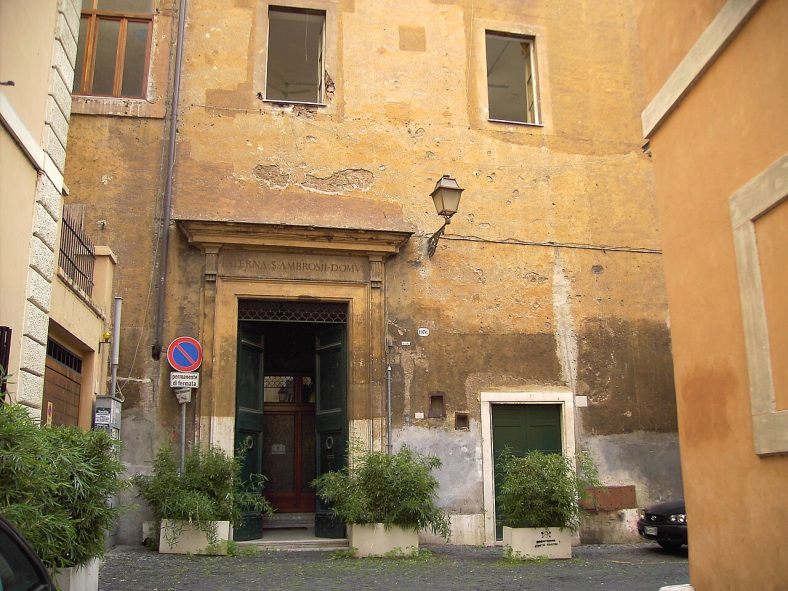
In the last few days of June, *Il Fatto Quotidiano* published several investigative articles, written by Maria Maggiore and Alessandro Mantovani, on an issue that, as the newspaper itself writes, is causing no small amount of embarrassment for the Rome City Council and Mayor Roberto Gualtieri. In short, the story concerns a prestigious property, the former Convent of Sant’Ambrogio, located in the heart of Rome, which the City of Rome granted free of charge to the local Jewish Community to serve as the headquarters of the “Renzo Levi” high school, a private comprehensive school. At the center of the controversy—and an appeal filed with the Regional Administrative Court (TAR) by various associations – the procedure followed is the direct assignment of public property to a private party, without any call for bids or public review. During the vote in the Rome City Council, the majority groups voted in favor, with the sole exception of Rome Futura council members Tiziana Biolghini and Giovanni Caudo, who abstained.
L’inchiesta di Maggiore e Mantovani rivela anche l’esistenza di sponsor israeliani dalla dubbia reputazione e dagli accertati legami con l’establishment Politician e militare di Tel Aviv. Altro elemento urticante, in tutta questa faccenda, è l’appartenenza dell’Assessore al Patrimonio, Tobia Zevi, alla stessa Comunità Ebraica Romana (CER) assegnataria dell’immobile.
The collusion with Israel that the Rome's City Council denies
This situation is alongside others, which shed light on a disturbing entanglement between Roberto Gualtieri's administration, the majority supporting it, and both CER and Israeli interests as such, such as the ongoing commercial relationship of the municipal company FARMACAP with the Israeli company TEVA, whose medicines are regularly sold in almost fifty Roman municipal pharmacies, or the nebulous nature of relations between ACEA and the Israeli company MEKOROT, a public company that deals with water management, taking it away from the Palestinians, not to mention the massive presence of real estate investments that also fall under Israeli entities, as in the case of the “regeneration” of the former General Markets in Ostiense, which should become luxury student accommodation and is causing the revolt of the local citizens, who would prefer a social and environmental redevelopment.
From the city halls to the Campidoglio and back
As has been widely reported on these pages, following the severing of ties between Rome Capital and the State of Israel and its corporate offshoots, over 16,000 citizens have spoken out by signing a Citizens’ Initiative Resolution promoted by the committee “Roma sa da che parte stare” (Rome Knows Which Side to Take), whose procedural process has been initiated and which is expected to come before the Capitoline Assembly for a vote within the next four months. It is important to note that seven municipal districts—among the most populous in the capital (accounting for well over half of Rome’s population) and all with center-left majorities—have approved motions calling for the Rome City Council to adopt the Popular Initiative Resolution.
Ha fatto eccezione il Municipio XIII, dove il 2 luglio la maggior parte dei consiglieri del PD ha votato insieme a quelli di Fratelli d’Italia, affossando la mozione e mettendo in serio imbarazzo la capogruppo dem, Angela Lidia Fanara, che aveva depositato lei stessa l’atto. Alcuni consiglieri hanno riferito di telefonate intercorse fra il Campidoglio e la presidenza PD del Municipio, che avrebbe poi impartito l’ordine di scuderia, al quale ha disciplinatamente obbedito la maggioranza dei consiglieri democratici, affiancando i loro voti a quelli dell’estrema destra. A titolo di cronaca, va detto che le proteste dei cittadini che assistevano al voto hanno portato alla sospensione della seduta.
I pronunciamenti dei Municipi mostrano comunque uno scollamento evidente fra la percezione della sensibilità sociale che hanno gli enti di prossimità, i più vicini al sentimento popolare, e l’amministrazione centrale, più attenta al rapporto con i poteri forti della città, fra i quali rientra a pieno titolo la CER, nonostante rappresenti sì e no un quarto dei cittadini ebrei romani. Nei Municipi hanno votato a favore del sostegno alla Delibera Popolare consiglieri del Partito Democratico, delle formazioni di sinistra ed anche di Azione, il partito centrista guidato da Carlo Calenda.
At the Campidoglio, however, the PD has adopted a strongly obstructionist stance, clumsily attempting to refute the indisputable data provided by Roma sa da che parte stare and raising a series of far-fetched technical objections to argue that it is difficult to bring the Popular Resolution to a vote on the floor. For example, in the “document” (unsigned, on plain paper, without a reference number, and undated) provided to the committee on June 25, regarding the relationship between FARMACAP and TEVA, reference is made to a Royal Decree from 1938 that requires pharmacists to dispense the medications prescribed by the attending physician… It’s a shame that in 1938, equivalent drugs—otherwise known as “generics”—did not exist, which renders that decree inadequate and superseded by the regulations more recently established by AIFA, the national drug agency. And it is precisely generics—which can easily be substituted with those produced by other companies—that constitute TEVA’s core business.
La Comunità ebraica romana rappresenta Israele ben più che gli ebrei romani
The central figure in the relations between Roma Capitale, the CER, and Israeli entities is undoubtedly Councilor Tobia Zevi, as well as Mayor Gualtieri himself. Zevi, former president of the Union of Young Italian Jews, is the brother-in-law of journalist David Parenzo, a famous character on the trashy radio show “La zanzara” and a die-hard Zionist.
In April 2020, Zevi ran in the Center-Left primaries to select the mayoral candidate for Rome, finishing sixth out of seven candidates with 3.53%, equivalent to 1,663 votes. Despite this less-than-stellar performance, Gualtieri appointed him councilor for heritage and housing, one of the most important portfolios in the capital.
The favors suspected of involving a conflict of interest granted to the Roman Jewish Community
Zevi è il simbolo del rapporto privilegiato esistente fra la CER, la giunta Gualtieri e gli esponenti del Partito Democratico in Campidoglio. Il Campidoglio appare letteralmente succube di una comunità che non rappresenta tanto gli interessi dei cittadini ebrei romani, quanto quelli del governo Netanyahu, caratterizzandosi come un’ambasciata parallela di Tel Aviv.
On July 1, Tobia Zevi’s department released what it claims is a response to the articles in *Il Fatto* and other objections raised regarding the transfer of the former S. Ambrogio building to CER. The Department calls the controversies “unfounded,” explaining that “the building requires consolidation, safety measures, and renovation, at an estimated cost of approximately 8.5 million euros, which the Jewish Community of Rome will cover in full.”
L’Assemblea Capitolina avrebbe quindi, sostiene Zevi, deliberato la concessione trentennale dell’immobile per finalità educative, in applicazione del Regolamento sul patrimonio indisponibile approvato con la deliberazione 104 del 2022. Non è pertanto corretto – sottolinea l’Assessorato – definire gratuita la concessione: “rapportando l’investimento previsto alla durata dell’affidamento, la Comunità sosterrà infatti un costo effettivo vicino ai 300.000 euro l’anno”.
La risposta dell’Assessorato di Tobia Zevi non appare affatto convincente. In primo luogo, gli anni di affidamento del palazzo alla CER previsti non sono 30, ma 30 più altri 20 rinnovabili automaticamente, quindi mezzo secolo. Da questa constatazione, si evince che il calcolo effettuato dagli uffici di Zevi sui costi effettivi sostenuti su base mensile dalla CER sia più che sovrastimato, perchè la spesa mensile raggiungerebbe più o meno i 17.000 euro e quella annuale sarebbe significativamente inferiore ai 300mila euro indicati. Ma soprattutto, il valore di mercato di un immobile molto grande, di pregio e in pieno centro storico di Roma è molto più elevato della cifra mensilizzata che dovrebbe sborsare la CER. Il costo mensile dell’affitto di un immobile come l’ex Sant’Ambrogio, infatti, può raggiungere i 180.000 euro, più di dieci volte quello che costerebbe alla CER nel caso ottenesse la concessione dell’edificio. Nel centro storico di Roma, con 17.000 euro al mese si può affittare una bottega o un ufficio, non certo un palazzo storico.

Quindi, se non di un “regalo”, come minimo si può legittimamente parlare di un grosso favore fatto dal Comune di Roma alla Comunità ebraica, soprattutto se si pensa che quei soldi non saranno entrate per il Comune, ma semplicemente il costo della ristrutturazione indispensabile per poter utilizzare l’immobile da parte della stessa CER.
Il problema politico, mentre è in corso un genocidio
A conclusione della loro inchiesta Maggiore e Mantovani sono costretti a scrivere che sia il Campidoglio che la comunità ebraica “(…) Aspettano il Tar, come se il problema fosse tutto lì. Come se i rapporti tra Roma Capitale e Israele non avessero scavato un solco nella sinistra e nella città”. E qui si apre il vero problema politico e uno scenario preoccupante in vista delle prossime elezioni comunali, perché il solco nella sinistra e nella città si allarga di giorno in giorno e, di qui al prossimo anno, potrebbe diventare incolmabile.
Rome knows which side to take is not just a slogan or the name of a committee. It is a fact. Last fall, the general strikes called first by grassroots unions and then also by the CGIL against the genocide and in solidarity with the Global Sumud Flotilla saw extraordinary turnout, and even more extraordinary was the turnout at the national demonstration in October, when the streets of Rome were flooded with more than a million people, most of whom came from every neighborhood in the city. Even today, although there are no longer such spectacular mobilizations, the outrage and anger toward the Jewish state remain very strong and are growing—in part because the consequences of the genocide and the heinous wars waged by Israel with the backing of its U.S. ally now directly affect our daily lives. Israel continues to occupy ever-increasing portions of other nations’ territories—not only in Gaza and the West Bank, but also in Lebanon and Syria—while constantly attempting to derail any possible resolution to the conflict with Iran, the repercussions of which we all experience every time we go grocery shopping or fill up our cars with gas.
Given this situation, the leaders of Rome’s PD are deluding themselves if they think this won’t also affect voting decisions, and they would do well to reflect on the fact that someone more important than them lost an election precisely because of their refusal to condemn Israel and support the rights of the Palestinian people… It has been amply demonstrated that Joe Biden and Kamala Harris’s procrastinating and essentially complicit stance toward Netanyahu played a major role in the loss of the White House, and this should give pause to those who might lose the Capitol.
In addition to the city as a whole, the rift is deepening and widening even within political circles on the left. Political forces such as the Five Star Movement and the Green-Left Alliance—indispensable for the constitution of the so-called “broad coalition”, how will they explain to their voters that—after having supported the protests against genocide and the Popular Resolution itself—they are now entering into an alliance with those who not only refuse to utter the word “genocide” but continue to support it and are complicit in it?
Rome is not just any municipality, however important it may be. It is a city that, in addition to being the capital of Italy, has a history that is unique in the world due to its universalist character—first as the capital of an empire that spanned Europe, Africa, and Asia, and later as the center of Christianity—a religion that still counts 1.5 billion followers worldwide today. A city that cannot and will not be complicit in the genocide currently taking place in what many call the Holy Land.
© Kritica – Riproduzione parziale consentita (non più di metà articolo) citando la fonte e inserendo il link all’inizio.
PHOTO CREDITS: Wikimedia Commons
#/media/File:Casa_di_sant_Ambrogio_al_Portico_di_Ottavia_0511-01.JPG)
4 Comments
Il problema, ahimè, sta nel Pd. La concessione diretta di un bene pubblico, senza bando, non sta nè in cielo nè in terra. A chicchessia. Assomiglia, in piccolo, alla vicenda dello stadio San Siro (con bando – manifestazione di interesse – farlocco). Altro discorso l’incapacità di prendere posizione e di conseguenza fare atti concreti per quanto riguarda Israele. A Milano come a Roma. Al di là della barzelletta della sovrapposizione di antisionismo e antisemitismo, sui motivi reali ci sarebbe da indagare. Anche se molto è già evidente. Questa cosa tenuta insieme con la colla del Campo Largo è una bufala micidiale. Chi è veramente di sinistra è difficile transiga sui principi. A Milano i buffoni al potere si stanno inimicando tutta la cittadinanza attiva infilando una topica dietro l’altra, mentre continuano la svendita dei beni pubblici. E nel frattempo (nonostante il sacrosanto referendum) i ruoli apicali della magistratura si piegano alla convenienza, come già fece Brutti Liberati per Sala. Ora se possibile va pure peggio. Mala tempora currunt.
(Non è un contributo mio ma di una giornalista ben informata sui fatti dell’edilizia milanese)
Pingback: Il problema della giunta Gualtieri con la democrazia partecipativa - Kritica
Pingback: Spin Time, "siamo un’anomalia ma anche un modello di comunità che funziona" - Kritica
Pingback: Spin Time, "siamo un’anomalia ma anche un modello che funziona" - Kritica