



Follow Kritica on Google
Add Kritica to your favourite sources.
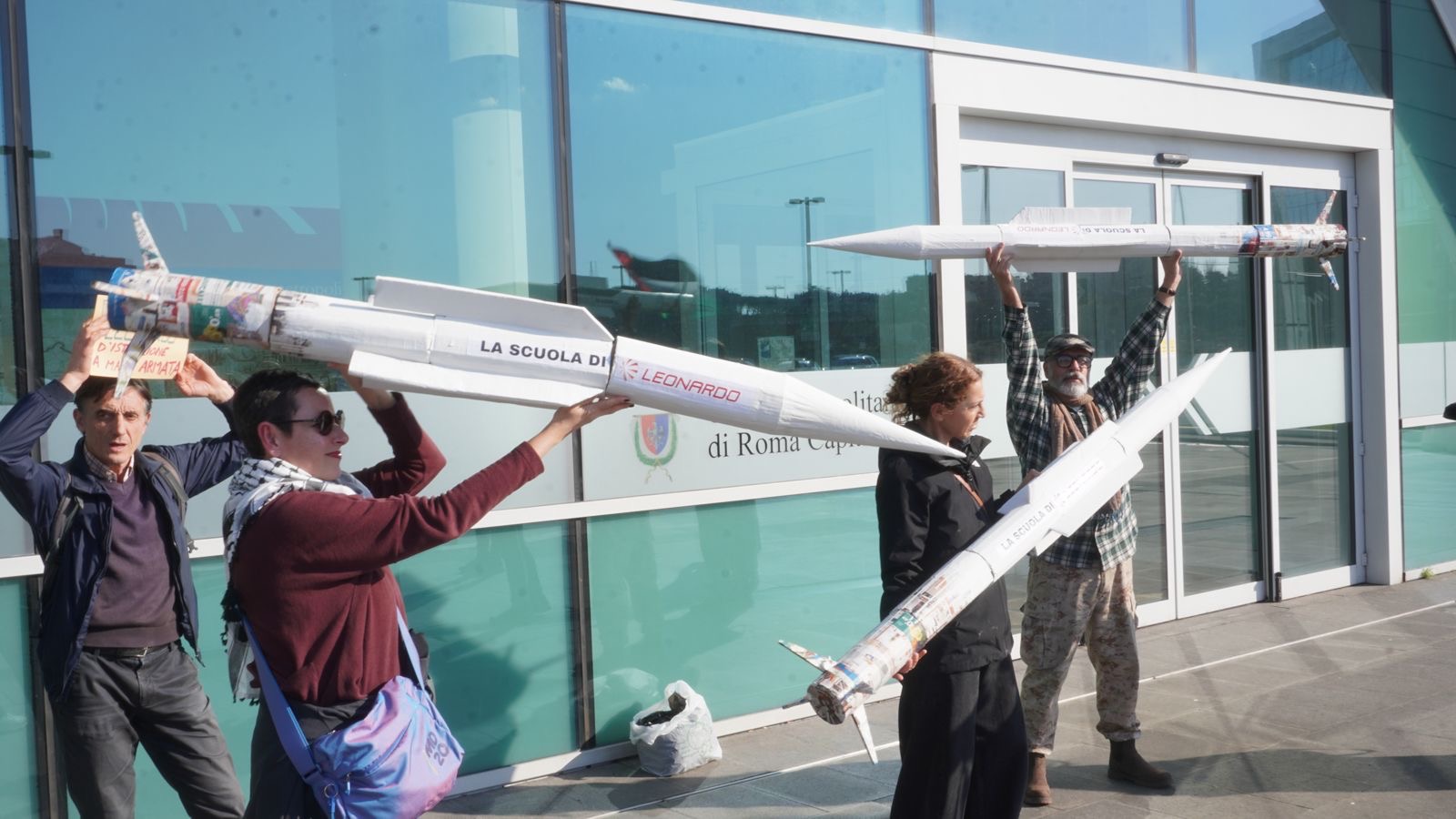
Quale ruolo svolgono oggi le imprese dell’industria militare nella formazione delle nuove generazioni? In che modo orientamento, percorsi STEM, innovazione tecnologica, cybersecurity e Formazione Scuola Lavoro contribuiscono a costruire consensus around the defence sector? These are some of the questions that get us started Leonardo's School, la nuova ricerca pubblicata da BDS Rome nell’ambito della campagna internazionale del BDS Movement per l’embargo militare contro Israele.
Al centro dell’indagine c’è proprio il ruolo di Leonardo SpA, principale azienda italiana dell’aerospazio, della difesa e della sicurezza, controllata al 30% dal Ministero dell’Economy e delle Finanze. La scelta di concentrarsi su questa impresa, spiega BDS Rome nel rapporto, nasce dal ruolo che essa occupa nel military-industrial complex internazionale e dalle relazioni commerciali e strategiche che intrattiene con Israele.
The inquiry places such relationships within the profound transformations that have affected the education system in recent decades. Corporatisation of schools, Partnership Public-private partnerships, the centrality of employability, and the growing subordination of education to market demands form the landscape on which the presence of defence companies in educational spaces is developing.
Militarised education
In questo contesto emerge il concetto di militarizzazione dell’educazione: un processo attraverso il quale soggetti appartenenti al comparto militare-industriale partecipano alla definizione dei contenuti formativi, degli immaginari professionali e delle competenze considerate strategiche. Nel dossier si introduce inoltre la nozione di israelizzazione dei sistemi educativi per descrivere il consolidamento di legami tra istruzione, tecnologie della sicurezza e del controllo sociale, apparati militari e produzione del consenso in una fase storica segnata dal regime di guerra globale e del genocidio.
Nineteen schools in the Metropolitan City
To reconstruct the dissemination of these collaborations, the institutional websites of all state secondary schools in the Metropolitan City of Rome were analysed. Of the 125 institutions examined, 19 show documentary evidence of links with Leonardo.
The identified activities include School-Work Training pathways, professional guidance, STEM initiatives, scientific outreach, and programmes dedicated to so-called “professions of the future”. Among the most widespread projects is Flying with Leonardo, carried out in numerous institutions in the Roman and provincial territory. Through activities dedicated to aerospace, technological innovation and digital skills, the programme connects students with the company's professional world and its related production sectors.
Il caso del Liceo Digitale del Matteucci
L’esempio più significativo individuato dalla ricerca riguarda l’IIS Carlo Matteucci di Roma. Dal 2022 l’istituto ospita il Liceo Digitale, sviluppato in collaborazione con Leonardo SpA e Leonardo Foundation ETS. La partnership comporta il coinvolgimento dell’azienda attraverso l’intero quinquennio scolastico e interessa direttamente la progettazione del percorso formativo.
Over the two-year period, topics such as artificial intelligence, programming, machine learning, deep learning, and robotics are covered with the participation of experts from the company. In the following years, the course continues through internships and work-study activities at the company, integrated into the structure of the course itself. The Matteucci case shows a form of collaboration that goes beyond the model of occasional encounters between school and business, and translates into a stable presence of the military industry within the school curriculum.
Professional training and cybersecurity
Una dinamica analoga emerge nel settore della formazione professionale. A partire da un accordo con Città Metropolitana di Roma Capitale, Leonardo ha contribuito alla progettazione di un corso triennale gratuito per Operatore informatico in ambiente Cybersecurity presso il Centro Metropolitano di Formazione Professionale di Acilia. Rivolto a ragazze e ragazzi tra i 14 e i 17 anni, il percorso combina attività teoriche, laboratori specialistici e periodi di stage presso l’azienda. La cybersecurity occupa un posto sempre più rilevante nelle strategie educative promosse dal settore della “difesa”. Presentata come una delle competenze chiave del futuro mercato del lavoro, diventa al tempo stesso uno dei principali canali attraverso cui l’industria militare rafforza la propria presenza nei percorsi formativi.
Networks connecting schools and businesses
Documented collaborations are not limited to individual school projects. A significant part of the relationship between Leonardo and the education sector is channelled through intermediate bodies and educational networks that operate on a stable basis in the field of training (for example, ITS Academy). Among these is the ELIS Consortium, of which the company is a structural member. Through this participation, Leonardo contributes to guidance programmes, STEM initiatives, courses for students and teachers, and projects such as School4Life, dedicated to combating school drop-out. More than a simple sum of isolated activities, this builds an ecosystem in which large private companies participate in defining training priorities and professional models offered to new generations.
Innovation, STEM and consensus building
A central chapter of the research is dedicated to the Leonardo Foundation and the collection of cultural, scientific, and educational initiatives promoted by the company. Awards, STEM events, outreach activities, school programmes, and pathways focused on future professions are interpreted as tools for building consensus and strengthening the company's public reputation. Through these activities, the company presents itself as a protagonist in innovation, research, and technological development. The result is a profound disconnect between the company's public image and the reality of its business: a leading role in the production of armaments and military technologies, activities that not only generate a significant portion of profits but also make it complicit in the devastating humanitarian consequences of conflicts, even reaching accusations of complicity in genocide. This is a classic social washing operation aimed at redefining public perception of the brand.
Who controls student data?
La presenza di Leonardo nel sistema educativo non si esaurisce nelle attività formative. Un ulteriore livello di analisi riguarda il ruolo dell’azienda nelle infrastrutture digitali strategiche dello Stato italiano. La ricerca richiama infatti la partecipazione di Leonardo al raggruppamento che gestisce il National Strategic Hub, l’infrastruttura incaricata di ospitare e gestire una parte rilevante dei dati e dei servizi digitali della Pubblica Amministrazione. Tra i sistemi interessati dalla migrazione verso il Polo Strategico Nazionale figurano anche banche dati che riguardano il mondo dell’istruzione, compresa l’Anagrafe Nazionale dell’Istruzione. Questo dato, emerso nel corso dell’inchiesta, apre questioni di natura diversa. Leonardo gestisce l’infrastruttura che ospita tali informazioni, pur senza averne accesso diretto. Diversi specialisti evidenziano tuttavia le criticità che possono emergere in sistemi di questo tipo, soprattutto nelle fasi di aggiornamento software. La questione assume così una dimensione politica che investe la governance dei dati pubblici e il rapporto tra istituzioni democratiche e grandi gruppi industriali.
From research to political action
The final pages move from the realm of analysis to that of mobilisation. Student population, lecturers, families, trade unions, anti-militarist collectives and solidarity networks with the Palestine These are the possible subjects of a campaign aimed at interrupting collaborations between educational institutions and the military industry. The stakes, the dossier asserts, go beyond the case of Leonardo or Roman schools. The confrontation concerns the relationship between public education, the production of violence, security and social control technologies, and the construction of subjectivities. From this perspective, boycotting “defence” companies in educational contexts is proposed as a tool to oppose the normalisation of genocide, war, and the militarisation of education.
Download the BDS Rome dossier
© Kritica – Reproduction permitted, citing the source at the beginning and including the link.
PHOTO CREDITS: Dario Morgante
3 Comments
Pingback: Schools, Universities and Research: Militarisation Continues Apace
Pingback: MINUTES OF MEETING 25 JUNE 2026, Palestine Network Anima Mundi – FREE WORDS
Pingback: The military industry in schools. The dossier of BDS | Cesp and Cobas of Veneto